


As Caloosahatchee begs for water, Big Sugar says: We got dibs
As Caloosahatchee begs for water, Big Sugar says: We got dibs
Most of Florida is in the grip of a worsening drought, and the consequences are mounting.
In the greater Everglades region, nowhere is this more apparent than along the Caloosahatchee River, where low flows from Lake Okeechobee — an average of 476 cubic feet per second over the past month — have resulted in rising salinity levels, threatening tapegrass in the upper estuary and oysters in the lower estuary. The Caloosahaatchee needs 750-2,100 cfs from the lake to remain in the “optimum flow envelope.” It’s gotten less than that for more than three months running.
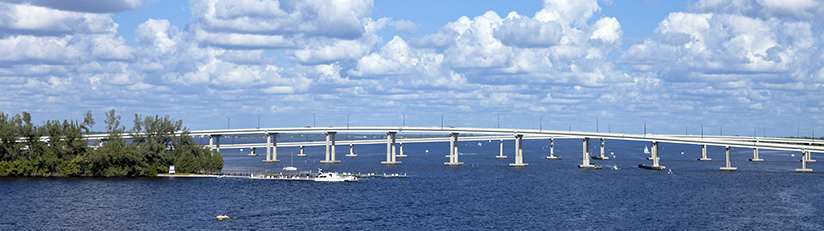
The water may look blue and wonderful, like some picture postcard — just what the tourists and snowbirds came to see! But unless things change, and soon, this time next year they’ll see a significantly damaged estuary.
And things aren’t likely to change. Lake O itself is falling and water levels are nearing the “water shortage management band.” That could result in cutbacks and mandatory restrictions; already the South Florida Water Management District issued a water shortage warning on Feb. 5, urging residents in Miami-Dade, Monroe, Collier, Lee, Highlands and Glades counties to voluntarily cut back water use. The district last week passed a resolution allowing Executive Director Drew Bartlett to declare a water shortage and impose restrictions should things get worse.
But at that meeting last Thursday, a parade of speakers got up to say that “water supply” must continue to be prioritized, no matter what.
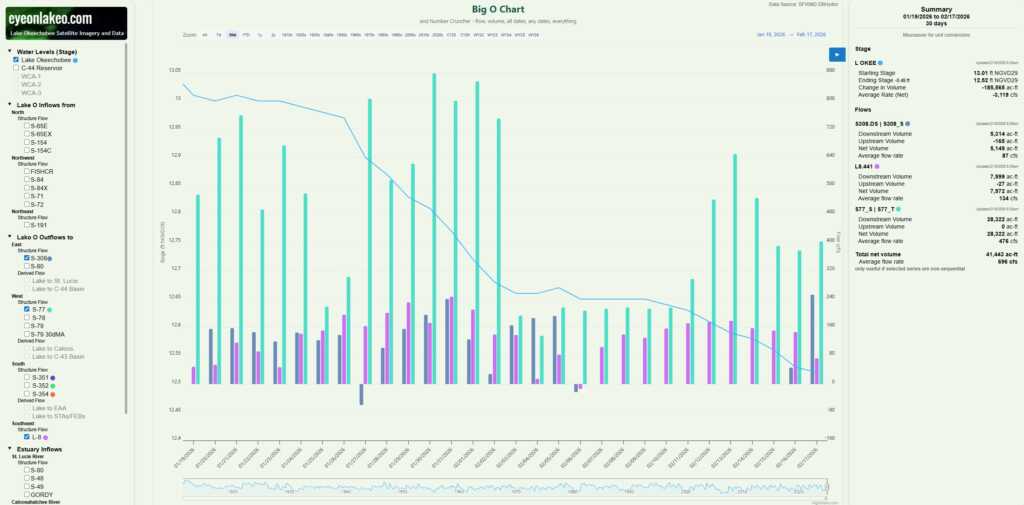
“Water supply” is the technical term that covers municipal water supply — the lake is a source or a backup source of water for millions. But it also covers agricultural usage, primarily for irrigating the vast sugar fields in the Everglades Agricultural Area. Flows to the EAA have averaged 1,699 cfs over the course of the past month, as shown on the above chart.
This is not a new dynamic, of course; but it came off as particularly stark last week as advocates for the Caloosahatchee essentially said: Please, we need more water. And the reply from “water supply” was: Tough. We got dibs.
We can hope the EAA Reservoir project will help when it comes online sometime within the next decade. But if we’re ever going to really end this dynamic, and not rob the Caloosahatchee to pay Big Sugar, we need yet more land to store yet more water in wet times, for use during a time like this.
We need to Rescue the River of Grass. Because if we don’t, we’ll be stuck in an endless loop of “shared adversity” — shared by every interest but one.