


White House blocked health reform because it needed Big Sugar campaign cash
White House blocked health reform because it needed Big Sugar campaign cash
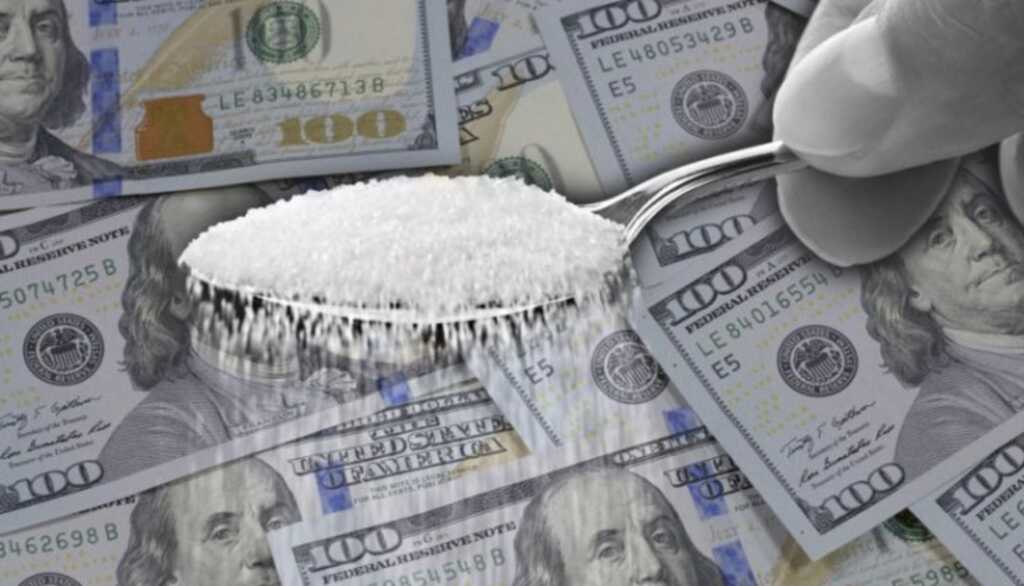
A former senior advisor to U.S. Health Secretary Robert F. Kennedy Jr. earlier this week told podcaster Joe Rogan that former White House Chief of Staff Susie Willes blocked key “Make America Healthy Again” initiatives because she didn’t want to alienate corporate donors — including Big Sugar.
Calley Means, the former RFK Jr. advisor, said Wiles specifically invoked the industry: “I need the money from the sugar people to win the midterms,” she allegedly said.
Some of the MAHA proposals involved greater regulation of sugary beverages and other food initiatives, which could crimp industry profits.
As VoteWater has documented for years, the sugar industry is a major campaign donor at the federal, state and even local level.
Federal campaign finance records show that members of the Fanjul family, who control the Florida Crystals empire, gave at least $618,000 to federal candidates and political action committees this electoral cycle, including a $132,900 from Jose “Pepe” Fanjul Jr., Chairman, President and Chief Operating Officer at Florida Crystals to the National Republican Campaign Committee.
The Fanjuls also gave to several Democratic politicians, including U.S. Reps. Debbie Wasserman-Schulz, Lois Frankel and Jared Moskowitz, among others.
U.S. Sugar gave $150,000 this cycle; $100,000 to “Stronger Safer Nation,” a Super PAC supporting U.S. Sen. Ashley Moody, and $50,000 to the “Conservatives for American Excellence” Super PAC. The affiliated United States Sugar Corporation Employee Stock Ownership Plan Political Action Committee gave another $312,000, mostly to Republican (and some Democratic) candidates and PACs.
The Florida Sugar Cane League PAC donated $275,000 this cycle; the Sugar Cane Growers Cooperative of Florida gave $166,000.
Other sugar interests across the country also pitched in, including:
- American Sugar Cane League of USA Inc. PAC, $1 million
- Michigan Sugar Company Growers PAC, $679,450
- Southern Minnesota Beet Sugar Cooperative PAC, $500,000
- Minn-Dak Farmers Cooperative Sugar PAC, $595,652
- United States Sugar Beet Association PAC, $51,000
The industry as a whole spent at least $4.3 million this cycle.
And this is how “dirty money” translates to policy – or lack thereof. The implication here is that federal health policy was based not on facts and evidence and science, but on campaign contributions from industries that might be affected by new restrictions.
This is why “dirty money” is so nefarious. It’s actually warping health outcomes in this case. And let’s not pretend it’s the first such instance.
Means, the former RFK Jr. advisor, noted that both Republicans and Democrats are desperate for campaign cash, and thus susceptible. The solution, he suggested, might “come from a presidential candidate running on the issue of amending the Constitution to take money out of politics.”
And we’d definitely vote for that.