


Flooding is poised to become one of the biggest political issues in Florida in 2027
Flooding is poised to become one of the biggest political issues in Florida in 2027
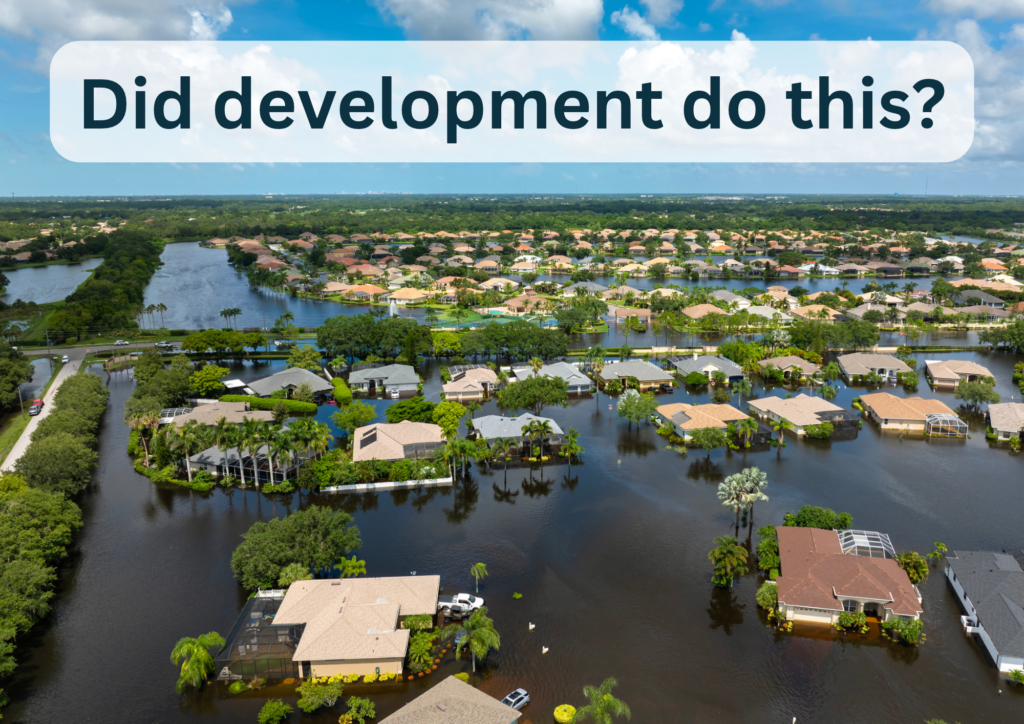
After another round of heavy, El Niño-driven rainfall last week — and flooding in South Florida, the Space Coast and other areas — more and more Floridians are wondering whether our state’s out-of-control development is responsible for the floods.
The answer, as we briefly noted a few weeks back, is no… and yes.
New development is required to plan for and accommodate stormwater runoff. In some cases, a new development may be better able to handle the runoff than the previous, undeveloped parcel could.
But the sheer amount of development, coupled with the sheer volume of rainfall, was destined to create problems.
Politically, as Politico Florida noted last week (paywalled), the state helps pay for infrastructure to deal with flooding: “The last budget DeSantis authorized contained about $300 million for local water projects, including stormwater management. He also, however, vetoed certain drainage projects in South and Central Florida.”
Then there’s the fact that “Counties and cities use revenue from property taxes to pay for the responses as well as for routine maintenance, drainage and creating more resilient infrastructure.” But with Amendment 3, local governments’ ability to build new infrastructure or fix aging systems to better handle flooding could be constrained.
Meanwhile, word out of Tallahassee is that Big Development has taken no lessons from any of this and will continue to push bills designed to open up more land to development and to make it easier and cheaper for developers to develop.
If this happens, it will be one of the most politically tone-deaf things we’ve ever seen.
As these rains continue to inundate our peninsula, now is not the time to be laying more pavement and dredging and filling more wetlands — quite the opposite.
One significant solution to this problem would be to “Rescue the River of Grass,” with the state acquiring more land south of Lake Okeechobee for water storage and treatment. All this additional water needs someplace to go — and it mustn’t be our estuaries, the Caloosahatchee and St. Lucie rivers and Lake Worth Lagoon.
In the meantime, Florida needs to hit the “pause” button on growth, for the consequences are growing. VoteWater will keep you up to speed on the pro-growth bills filed in Tallahassee in 2027, and how you can make your voice heard on these critical issues.