


Can the Indian River Lagoon be (nano)bubbled clean?
Can the Indian River Lagoon be (nano)bubbled clean?
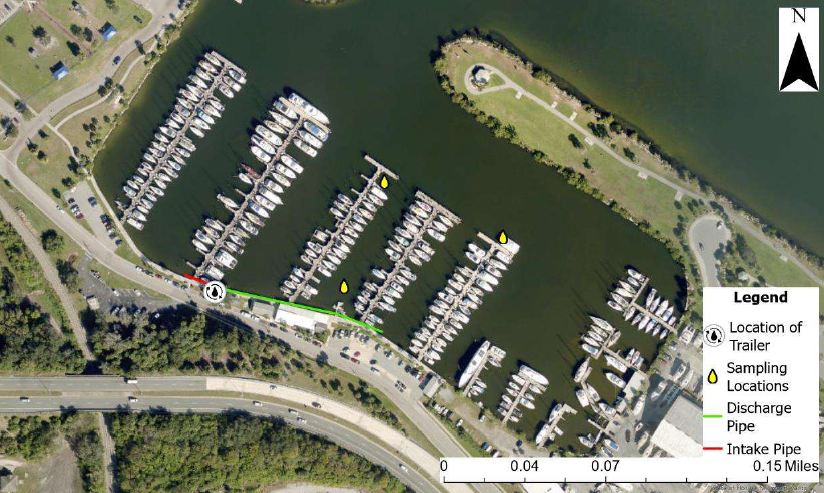
What do the Lincoln Memorial Reflecting Pool in Washington, D.C., and the Titusville Municipal Marina on Florida’s Indian River Lagoon have in common?
The use of nanobubbles to clean up algae.
Nanobubbles are microscopic bubbles – less than 200 nanometers in diameter (A nanometer is one billionth of a meter or one 25,400,000th of an inch.), or about 2,500 times smaller than a grain of salt. They’re what make waterfalls and whitewater white.
The basic science of using nanobubbles to clean up water has been around for years, and in the last five to 10 years, the technology has been used in aquaculture, wastewater treatment and algae management, according to a June 16 report by the New Jersey Institute of Technology.
The hope is that nanobubbles can be used to get rid of algae, first in a pilot project that began last February at the marina at Titusville and then in other areas of the Indian River Lagoon.
“The project is aimed at reducing concentrations of nutrients in the water to prevent algae blooms,” said Austin Fox, assistant professor of ocean engineering and marine sciences at Florida Tech who, with the Brevard County Natural Resources Department, is independently tracking the project.
“The potential impact (of nanobubble technology) is significant,” according to a report in the July 3 issue of The Conversation by Gang Pan, professor of environmental sustainability at York St. John University in York, England. “If oxygen can be delivered cost-effectively to surface sediments, it may help reduce internal phosphorus release, suppress methane generation and generally make conditions more favourable for life at the bottom of the ocean.”
And nanobubbles do the work without harsh chemicals, such as algaecides, that can kill desirable organisms in the water.
How it works
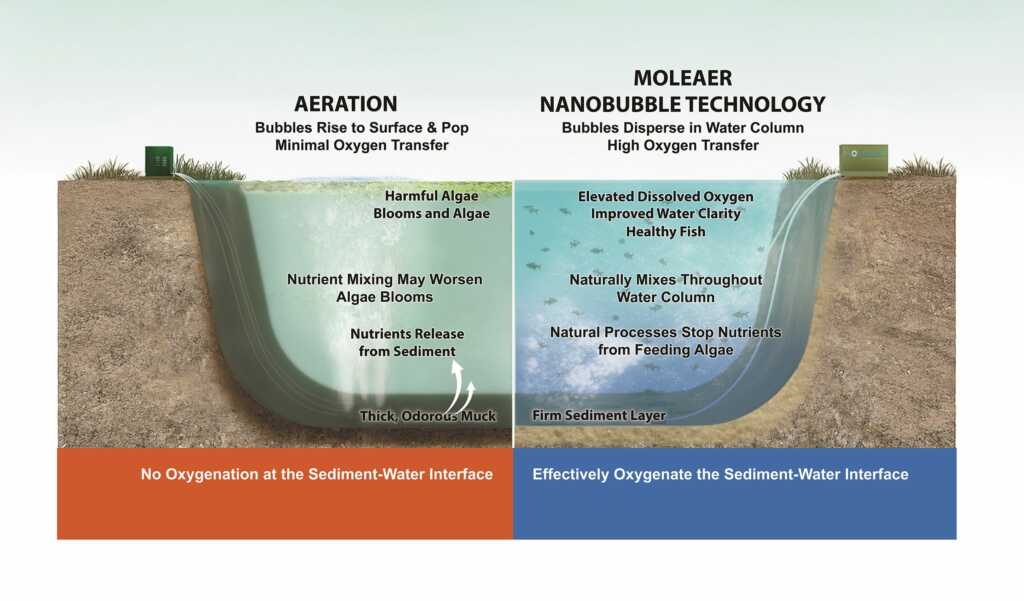
Water rich in nanobubbles is pumped to the bottom of the water body (a pond, the Reflecting Pool or, in this case, the lagoon-adjacent marina) where oxygen levels are low and sediments release nutrients that fuel harmful blooms.
Because nanobubbles are microscopic, they don’t rise and release gas at the surface of the water the way larger bubbles do. Instead, they stay at the bottom of the water for weeks or months, increasing oxygen levels, improving natural recovery processes and reducing nutrient release from sediments.
Studies by Florida Tech scientists have shown water at the bottom of the Indian River Lagoon has particularly low oxygen levels. Lagoon muck, Fox said, is mostly inorganic silt with a coat of organic material at the top. Getting more oxygen to that layer of bottom sediment, where phosphorus is released and methane produced, helps bacteria eat up the organic material, a process called aerobic decomposition.
“It’s like a compost pile,” Fox said. “You have to stir it up, get oxygen spread through it, or it won’t decompose.”
 California-based Moleaer Inc., which is providing the machinery for the Titusville project called Green to Clean, has deployed more than 4,000 nanobubble generator systems in more than 55 countries. The system installed at the marina pumps roughly 1,000 gallons per minute, sucking water out of the marina, injecting it with a mixture of oxygen and “a little bit of ozone,” Fox said, and putting it back into the marina.
Using ozone has both benefits and drawbacks. Ozone nanobubbles quickly kill active algae, pathogens and organic matter; but they also can wipe out beneficial aerobic bacteria that naturally keep algae in check, leaving the water susceptible to recurring blooms unless nutrient inputs are constantly managed.
Fox said the amount of ozone added as water is pumped out of the lagoon is so slight that “none (of it) goes out into the environment” when the water is pumped back into the lagoon.
Know your enemy
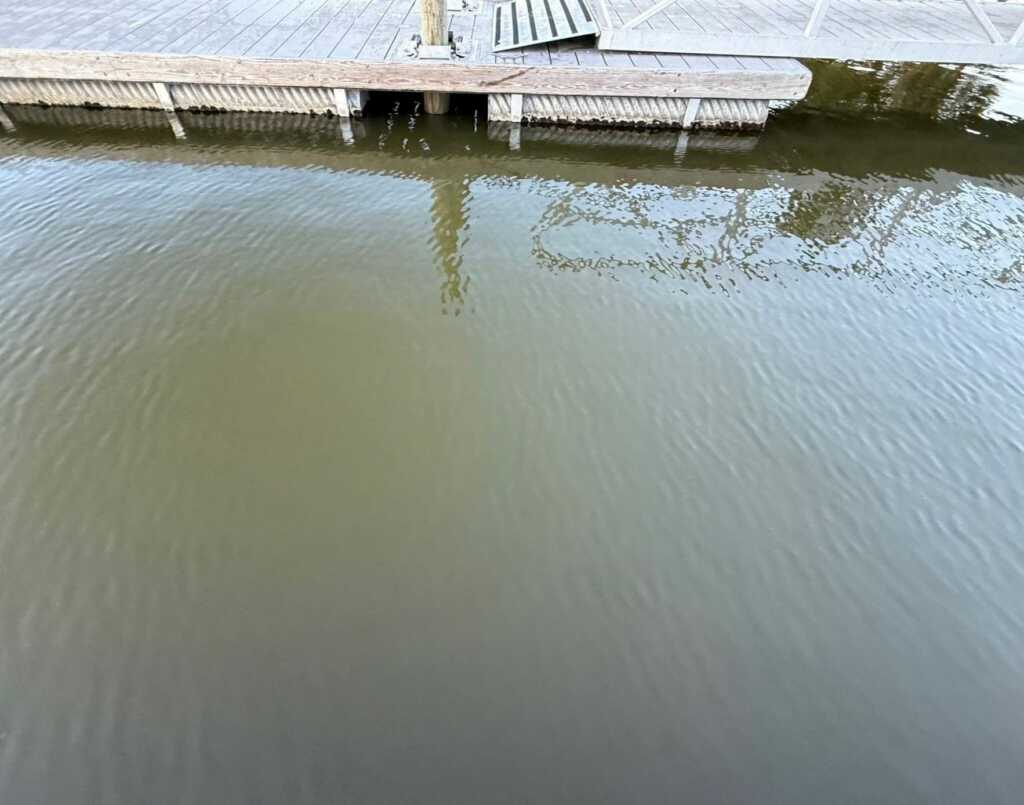
The primary algae causing harmful algal blooms in the Titusville Marina is brown algae (Aureoumbra lagunensis), a microscopic, single-celled organism responsible for the intense “brown tide” blooms that frequently plague areas of the northern Indian River Lagoon. (An outbreak of brown tide in the lagoon and the adjacent Banana River in early 2016 caused a massive fish kill that left over 65,000 pounds of fish dead in Brevard County.)
While brown algae is not known to produce toxins (like blue-green algae, aka cyanobacteria, which can produce microcystin and other toxins), the blooms turn the water a murky brown and block sunlight from reaching seagrass beds, which are essential to the lagoon environment, and deplete dissolved oxygen, leading to fish kills.
Then, a vicious cycle can develop: The blooms further deplete oxygen; oxygen depletion releases more nutrients; and the nutrients create more blooms.
The lagoon around Titusville can also suffer from large mats of macroalgae (aka seaweed, such as sea lettuce) that thrive along the bottom substrate and docks.
“We have a mix of algae types,” Fox said, “so dealing with them is kind of like Whack-a-Mole.”
Unlike the St. Lucie River Estuary and adjacent sections of the lagoon, where blue-green algae blooms are caused by Lake Okeechobee discharges and canals that bring in polluted water from agricultural land, pollution sources for the lagoon around Titusville “are all mixed up,” Fox said.
Major sources include:
- Stormwater runoff: Rainwater washes pet waste, fertilizers, pesticides, vehicle fluids, trash and leaf or grass clippings off roofs, driveways and roads into storm drains and canals that empty into the lagoon.
- Land development and construction: Widespread land clearing and large-scale residential developments bulldoze natural buffers and increase nutrient loads.
- Septic and wastewater systems: Leaky septic tanks and aging wastewater infrastructure seep water loaded with nitrogen and phosphorus through sandy soils into the estuary.
Most uses – and most successes – of nanobubble technology in the past have been in freshwater, Fox said. “That’s where the aeration has been incredibly successful. This project (at Titusville) is a test of how the technology will work in a marine environment.”
Progress report
It’s been over eight months since the pilot project started. How’s it working?
 “It’s too soon to make any real comments on the Titusville project in particular,” Fox said in an email, noting that “we don’t actually have any data published or reported yet, and we still don’t have final results.”
From “general observations from various aeration/nanobubble projects,” Fox said his team is “seeing benefits to sandier areas in multiple nanobubble test areas.”
On the other hand, they’re “not seeing the same thing happen here (in the lagoon’s brackish water) as what happens in freshwater,” Fox said, adding that water in the Titusville marina has a salinity of from 20 to 30 parts per thousand, not that much lower than ocean levels of about 35 parts per thousand.
One reason for the less-than-stellar results is that saltwater, which contains dissolved sulfate, turns into hydrogen sulfide in conditions with very little oxygen (hypoxia) or essentially no oxygen (anoxia) – conditions found at the bottom of the lagoon.
“The result is that it takes a lot more oxygen to get rid of the hydrogen sulfide,” Fox said.
Fox was hesitant to say if pumping more oxygen would make the project less cost-effective (Moleaer has agreed to pump extra oxygen in the current project at no extra cost), “but certainly you would need more equipment running longer, so there would be more cost.”
Other high-tech attempts to fight algae
Here’s hoping nanobubble technology proves to be more effective than some of the other technologies have been tried in the past in efforts to clean up algae blooms in the Indian River Lagoon and surrounding waters.
In July 2016, Stuart-based Ecosphere Technologies performed a week-long demonstration project to remove mats of toxic blue-green algae from the Outboards Only marina in the Rio community along the St. Lucie River. The company used a specialized cleaning unit that sucked out the contaminated water, chopped up the algae, treated it with electricity and high-frequency sound waves and pumped it with ozone before returning it to the basin.
Ecosphere officials said cleanup of the football-field-sized basin would take a couple of days. It took a week, and the officials demonstrably jumped into the water, touting Florida Department of Environmental Protection water samples showing zero microcystin (the toxin found in blue-green algae).
A DEP panel, however, was “unimpressed,” focusing on another sample showing the machinery eliminated only about half of the microcystin passing through it, failing to drop the active treatment levels below hazardous thresholds.
Critics and officials also noted that natural processes and river water moving with tides had concurrently helped clear out nearby basins.
In July 2017, A Michigan company set out to prove it could literally shock pollutants out of water entering the Indian River Lagoon from the Main Relief Canal in Vero Beach. Although Greenfield Resources’ electrohydraulic technology successfully removed nitrogen and phosphorus from water in initial demonstrations, the process was not adopted as a long-term solution because of size limitations and high operational costs.
Other proposals for getting rid of algae have included:
Algaecides – Chemicals such as copper sulfate and hydrogen peroxide have been used for many years to control algae and parasites in freshwater farm ponds and aquaculture operations. But they’re made for killing algae in freshwater, not salty or brackish water and way too expensive to use in a large area like the estuary.
Plus, the dying algae cells can release their toxins into the water, causing a threat to people and small marine animals. And the sudden death of all the algae cells will cause a feeding frenzy by bacteria in the water. The bacteria remove oxygen from the water; and a lot of bacteria can suck it all out.
Copper sulfate-based algaecides have fallen out of favor because they accumulate in the muck at the bottom of the water body and “bioaccumulates” in animals such as mollusks and fish. (FYI: Bioaccumulation is when a chemical or compound builds up in organisms over time, like mercury building up in fish and dolphins.)
Algae-eating fish – A number species of fish are commonly used to keep algae under control in ponds and lakes. Several types of catfish and carp and even good-tasting tilapia will eat blue-green algae. The problems include scalability – you’d need A LOT of fish to control blooms – and unintended consequences anytime foreign species are introduced to an ecosystem to control another species.
For example: Chinese grass carp were imported and stocked in Florida lakes in 1972 to control hydrilla. It worked, but too well. Once the carp ate all the hydrilla, they started eating other water plants; and now water managers can’t get rid of the carp.
There was even one Treasure Coast resident who, after seeing a nature show with flamingoes eating blue-green algae from a lake in Africa, suggested putting flamingoes in Lake Okeechobee. Again, it would take beaucoups of flamingoes to make a dent in the algae blooms; and the birds, which do well in the Miami area, probably wouldn’t survive winters farther north.
Nanobubbles at the Reflecting Pool
Shortly after mobile and permanent nanobubbler systems were installed in June by the National Park Service as part of a $1.74 million treatment system, algae repeatedly returned and required manual vacuuming, algaecide (in this case, they used hydrogen peroxide) treatments and draining, according to an ABC News report.
(The algae problem was compounded by a rushed $16.4 million renovation that used a peeling blue polyurea coating and aging underground water supply lines, the report noted.)
In other words, treating blooms once they occur tend to be short-term solutions to a deeper, long-standing problem.
“The most durable solution,” Zhang said in the New Jersey Institute of Technology report, “is still to remove the nutrient source and, ideally, remove algal biomass from the water. If you only kill algae in place, some of that biomass can break down and release nutrients back into the water, which means the bloom can return later. So nanobubbles can be very useful, but whether the effect lasts depends on whether the treatment is paired with nutrient control, circulation, solids removal or sustained operation.”
At a demonstration of the Titusville project in March, Mayor Andrew Connors told TV station WKMG in Orlando that nanobubble technology “is not a silver bullet. There is no single solution to decades of accumulated environmental stress, but this is a bold step forward.”
Nearly eight months later Fox added: “I don’t want to make it sound like this kind of project (at Titusville) isn’t worth doing. If we don’t stop the sources (of muck and algae blooms), we have to find ways to maintain the lagoon.”